


State-of-the-art techniques for complex spinal surgery
By Admin | April 18, 2026
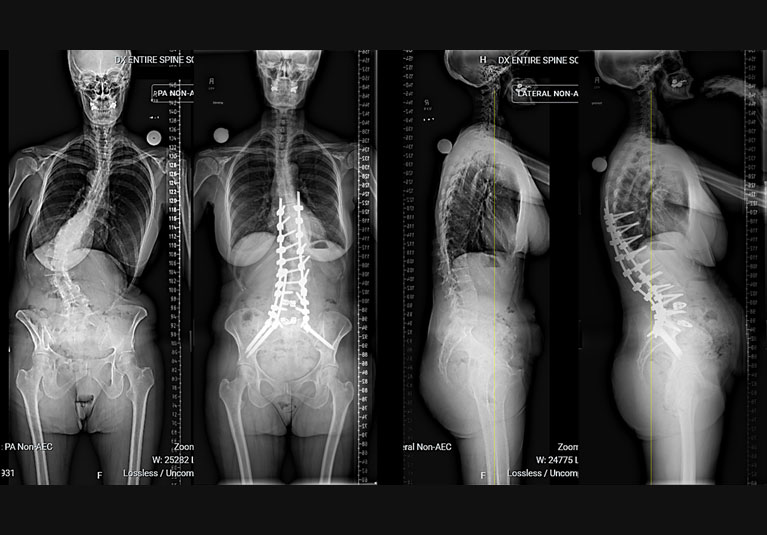
"These are complicated surgeries. But we are resource-rich in terms of technology," says Joshua Bakhsheshian, M.D., M.H.A., a neurosurgeon at Mayo Clinic in Phoenix/Scottsdale, Arizona. "We want to improve our patients' quality of life and get them back to a functional life as soon as possible."
Predictive analytics, customized implants and robot-assisted intraoperative guidance help minimize complications. Those technologies, used enterprise-wide, also facilitate personalized treatment.
"Every patient is different," Dr. Bakhsheshian says. "Our patient-centered approach helps us meet the tailored needs of both younger and older patients."
Imaging and surgical expertise
Surgical planning starts with comprehensive imaging. "We look at the entire body, head to toe — not only the spine but also the knees, hips and legs," Dr. Bakhsheshian says.
Those results, coupled with a thorough physical evaluation, help determine if a patient is a surgical candidate. Surgeries are meticulously planned. "There's a lot of hard work before we even get to the operating room," Dr. Bakhsheshian says.
Artificial intelligence (AI) algorithms are used to precisely model a patient's spinal anomalies. AI also can help predict how an individual's spine might realign after surgical adjustment. "That sometimes allows us to use surgical implants on fewer spinal levels," Dr. Bakhsheshian says.
Computer simulations map out the correction that surgeons hope to...(More)
For more info please read, State-of-the-art techniques for complex spinal surgery, by Mayo Clinic